
Agents in Claude Code: what subagents are, why to run several at once, and how to start them
Most people run the Claude Code development tool in one long conversation, and miss the feature that takes it from fast to genuinely powerful. Agents let you split a big task across several AI workers running in parallel, each in its own clean context window, returning a short summary to the main conversation.
Claude Code is Anthropic's AI-based coding environment, running in the terminal and inside code editors. The default is a single conversation where you and the model work in a tight loop, which is excellent for short tasks. The moment the task grows, the context window fills up with search results and files you'll never read again, and the answers get slower and less accurate.
This is where agents come in. In this guide we'll explain in plain language what an agent is in Claude Code, why several agents beat one, how to start them in a few different ways, where this works, and which skill helps the tool decide by itself how many agents to split each task into.

What actually is an agent in Claude Code?
An agent, also called a subagent, is a dedicated AI worker that the main conversation hands a task to. Instead of all the work piling up in one conversation, the agent takes the task, performs it in its own separate and clean context window, and returns only a short summary at the end. Each agent has its own instructions (a system prompt defining how it should operate), a set of tools it's allowed to use, and optionally its own model. You can, for example, route a simple task to a faster, cheaper model such as Anthropic's Haiku.
Several agents ship with the tool already. The Explore agent specializes in fast read-only searching through the code, the Plan agent builds a plan of action before any code is written, and there is also a general-purpose agent for varied tasks. You can define your own agents too. The full official explanation is in the Claude Code agents documentation.
Why several agents rather than one?
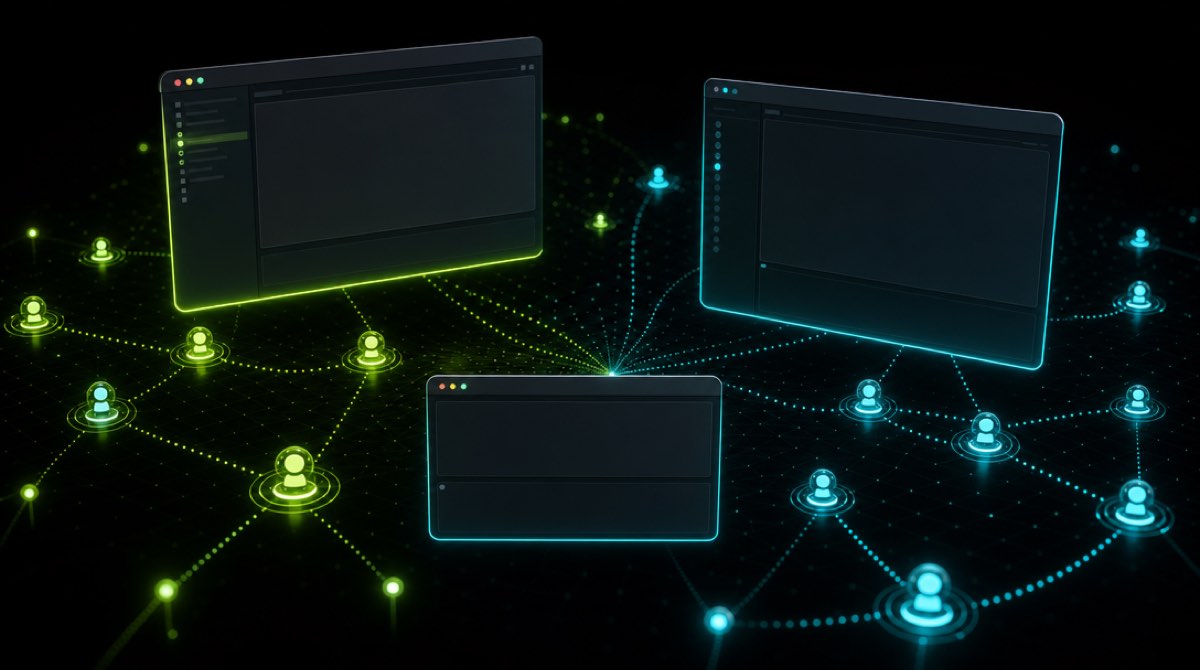
The idea is scaling: the ability to grow the amount of work without losing quality. A single main conversation is one worker collaborating with you in a tight loop, which is excellent for a focused task. When a task is large, subagents branch off into their own clean context windows and run in parallel, each handling a different part, and at the end return a short summary so the main context stays clean. The result is faster work, wider coverage, and more accurate answers.

Picture a task that requires reviewing three modules of code. Rather than letting module after module flood the main conversation, three agents review them simultaneously and return three digests. Beyond subagents running inside a single conversation, there are also background agents: full, independent Claude Code sessions you can run and monitor in parallel from one place. There is no fixed documented maximum number of agents; it adapts to the size of the task and runs several in parallel as needed.
How do you run agents in Claude Code?
The best part is that you don't need to configure anything in advance to get started. On any task you give in the Claude Code chat, you can simply ask the tool to run several agents, and it will plan the division of work and run them in parallel itself.
A typical case: you write a request like this in the chat
Split this task across several agents running in parallel, one agent per independent part, then merge the results into a single summary.
Claude Code will decide how many agents are needed based on the size of the task, open a separate clean context window for each, run them all together, and return a tidy summary of what each agent did. This works even without asking explicitly, because when a large task divides into independent parts, the tool knows to delegate them to agents on its own.
If you want to go further, you can also define your own permanent agents, with the /agents command or in .claude/agents files, but that isn't required at all to get the benefit, and most people simply ask for it directly in the chat.
Where does this work?
Agents aren't a feature of one place. They're available anywhere Claude Code is installed, which means you can work the same way in the terminal and inside the code editor you're used to.
Claude Code is available in the terminal (the command line), through the VS Code extension (Microsoft's code editor), in JetBrains development environments, in the Cursor editor, in the desktop app, and in the browser version at claude.ai/code. In short, anywhere the tool is installed, the agents simply work. You can see the official list of environments in the Claude Code overview guide.
How do you get the tool to split into agents by itself?

A skill is a package of instructions you install: a folder with a SKILL.md file that you put into a project or into the ~/.claude/skills folder, teaching Claude Code how to work. The official explanation of skills is in the Claude Code skills documentation.
This particular skill guides Claude Code to split a task into the right number of agents according to how complex it is. A small task stays simple and in one conversation, and a large task splits automatically across several parallel agents, which saves time and improves the result. You can download it free and add it to any project working with Claude Code:
Frequently asked questions
What's the difference between a subagent and a regular conversation?
Answer: a regular conversation runs in your main context window, and you manage it directly. A subagent branches off into its own separate, clean context window, performs the part delegated to it, and returns only a short summary, so the main context stays clean.
Does running several agents cost more?
Answer: each agent consumes its own context window and counts against your account's quota, so running several parallel agents consumes more than a task in a single conversation. In return you get faster and broader work, which is why it's worth splitting into agents mainly on large tasks.
Do you need to be a developer to use agents?
Answer: not to understand the idea. Basic use is a request in ordinary language, and the tool delegates to an agent by itself. Defining custom agents and YAML files takes a little technical familiarity, but the /agents command walks you through it step by step.
Does this work in VS Code and Cursor?
Answer: yes. Agents are available anywhere Claude Code is installed, including the VS Code extension, the Cursor editor, JetBrains environments, the terminal, the desktop app and the browser version.
Good luck,
TodoAI

Want hands-on help
adopting AI in your business?
At TodoAI we help organizations and business owners pick the right tool, embed it in the team, and win back hours every week.
Message us on WhatsApp
Our busy group,
tips and updates
Join the group and be among the first to hear about the hottest AI tools, tips and news, straight to WhatsApp and free.
Join the community
Create professional
podcast videos with AI
The MakePodcast platform produces short podcast videos for your brand, with your own host and your own script. No camera, no studio, no editor.
Get early accessTopics in this article
8 tags- agents in Claude Code
- subagents
- Claude Code
- AI agents
- automation
- VS Code
- Cursor
- TodoAI