
AI models: what they are, why every business needs one, and how to create your own
Picture a model who presents your products whenever you feel like it, wears every item in the catalogue, and asks for no shoot day, no studio and no hourly rate. That is exactly what an AI model is, and it is already changing the rules of marketing.
Huge brands have already moved to it. The fashion chain Mango launched an entire campaign generated wholly with AI, and H&M created digital versions of real models. What was once the preserve of enormous budgets is accessible today to any small business with a phone and a few minutes.
In this article we'll explain exactly what an AI model is, why every business can and should have one, and why whoever starts now gets ahead of everyone else. At the end we'll also show how you create your own model, dress it in your products, and turn one image into a full campaign video.
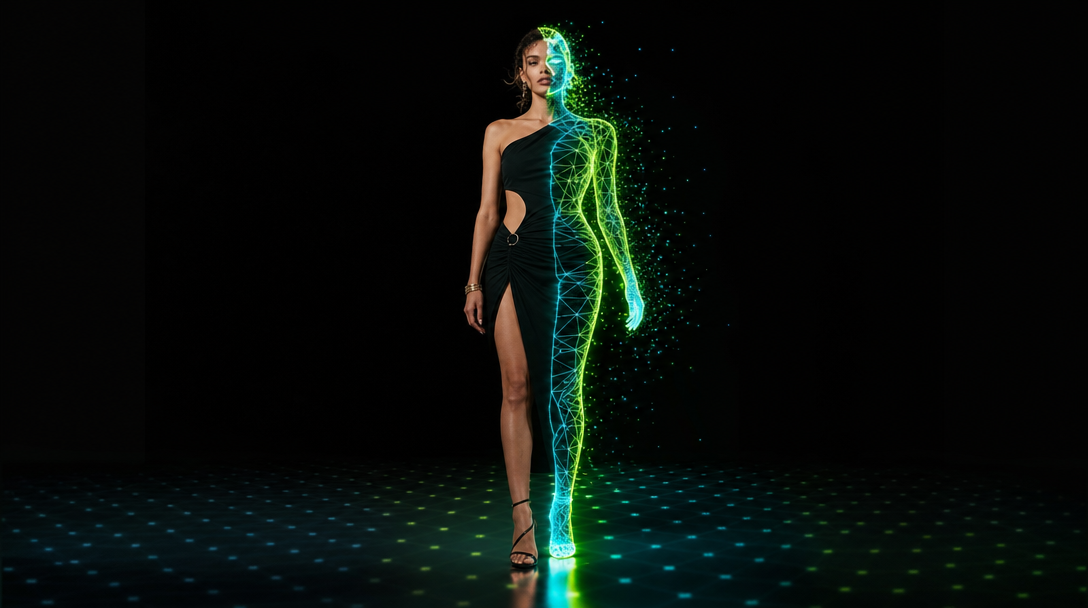
What actually is an AI model?
An AI model is a digital human character generated entirely with artificial intelligence: a fixed face, body, style and personality. Unlike a random image you generate once, the real power is in consistency. That same recognizable character comes back again and again in every image, in every outfit and in every campaign, as though you had an in-house model permanently on call.
There are two main uses. The first is a brand model presenting products in polished images and videos. The second is producing UGC-style content (content that looks as though a regular user shot it on a phone): a natural character showing a product, doing an unboxing or recommending something, exactly like a genuine social post.
Here's how it looks in practice. The carousel below is a completely photoreal AI model we created at TodoAI:
Why can and should every business have an AI model?
A traditional product shoot day is an expensive, cumbersome project. You have to hire a photographer, book a model, pay for a studio, styling and make-up, and then go through another editing round. All of that easily adds up to thousands per single day, and takes weeks of coordination, for a few dozen images at the end.
An AI model erases almost all of that expense. Instead of a shoot day, you generate hundreds of variations of the product on the character within minutes, for the cost of a small monthly subscription. That's why Mango, which launched a full AI campaign, and the fashion chain H&M have already moved to it, and Levi's and Zalando generate a significant share of their images this way too.
| The task | Traditional shoot day | AI model |
|---|---|---|
| Cost | Thousands per day | A low monthly subscription |
| Time | Weeks of coordination | Minutes |
| Number of images | A few dozen | Hundreds of variations |
| Flexibility | A new shoot for every change | A change in a single prompt |
Why will every business move to this, and why start now?
This isn't a passing trend. The virtual influencer market is growing very fast, and is expected to multiply several times over in the coming years. As the tools get better, the difference between a real photo and an AI photo all but disappears, and the cost keeps falling.
The implication is simple: within a few years this will be standard, just as it's taken for granted today that every business is on Instagram. Whoever builds this capability now enjoys a cost and speed advantage ahead of everyone, and accumulates experience while competitors are still deliberating. Just remember to stay transparent with your customers, and to label AI-generated content where appropriate.
How do you create your own AI model? Step by step
The process splits into three stages: you create the character, you dress it in your products, and you animate it into a video. Here's how it works:
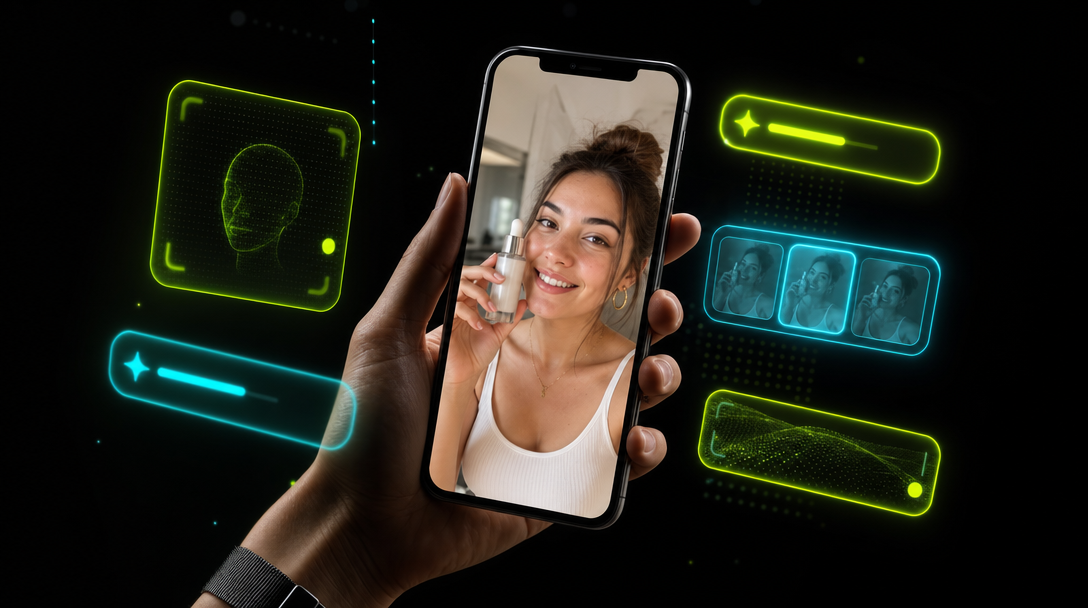
- Create the base character.You can create it easily in an AI image tool: describe the model naturally, in UGC style. The secret to realism is describing a real moment rather than a studio shot: mention that it was shot on a phone, natural light, a small imperfection in the skin, and an everyday background. Keep the character consistent each time by uploading a reference image of them and writing "exactly the same character, the same face".
- Dress it in your products. Once you have a fixed character, upload it together with a photo of the real product or garment, and ask the AI to replace only the clothing without changing the face, the pose or the lighting. That way one model wears the entire catalogue and stays the same character.
- Turn it into a campaign video. Take the finished image and upload it to a tool that animates an image into video. Write a short motion description (a smile, a turn towards the camera, lifting the product), and you get a short clip. Join several clips together and you have a complete video ad with no shoot day.
For illustration, here's what a short prompt for creating a UGC-style character looks like. Note the emphasis on phone, natural light and imperfection, which are exactly what makes an image look real:
selfie of a 26 year old woman with freckles, holding [your product] near her face, genuine smile, soft morning window light, messy bathroom counter, shot on iPhone front camera, natural skin texture, slight grain, not retouched, vertical 9:16
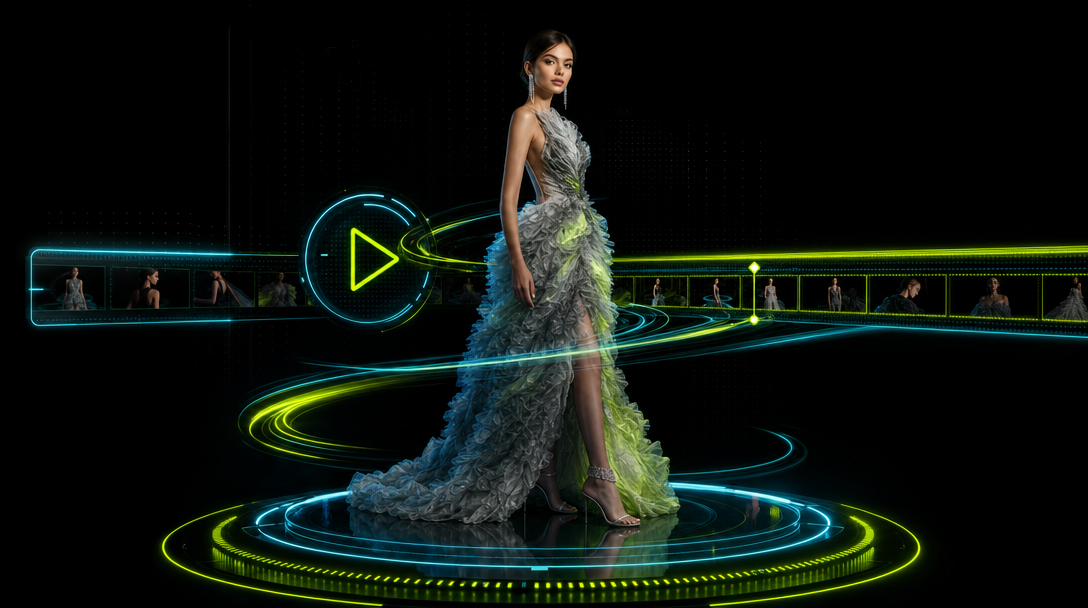
A real example: the model below was dressed in an evening gown by the dressmaker Daniella Speedy. Instead of a photo studio, a model and expensive time, she got polished campaign images and video and saved thousands:
Frequently asked questions
What is an AI model?
Answer: a digital human character generated with artificial intelligence that presents products in images and videos, with a fixed face and style, with no photographer and no shoot day.
Does it really save money?
Answer: yes. Instead of thousands for a shoot day with a photographer, a model and a studio, you generate hundreds of images at far lower cost, and in minutes rather than weeks.
Can the model wear my actual products?
Answer: yes. You upload a photo of the product or garment, and the AI dresses the character in it without changing the face and pose, so you can present a whole catalogue on the same model.
Can the image be turned into a video?
Answer: yes. Image-animation tools turn a single image into a short clip with motion, and you can join several clips into a complete video ad.
Is this appropriate for commercial use?
Answer: yes, large brands are already doing it. It matters to stay transparent with customers, to label AI-generated content where appropriate, and to make sure you hold the rights to the products shown.
Good luck,
TodoAI
Want a campaign video with your own AI model?
At TodoAI we create a dedicated AI model for your brand, dress it in your products and turn that into a campaign video ready to publish. No studio and no shoot day, leave the rest to us.

Our busy group,
tips and updates
Join the group and be among the first to hear about the hottest AI tools, tips and news, straight to WhatsApp and free.
Join the communityTopics in this article
8 tags- AI model
- virtual model
- UGC AI
- virtual influencer
- AI product photography
- AI campaign video
- AI for business
- TodoAI